 Katla Ice Cave Tours
Katla in Summer: the Only Icelandic Ice Cave Open in July

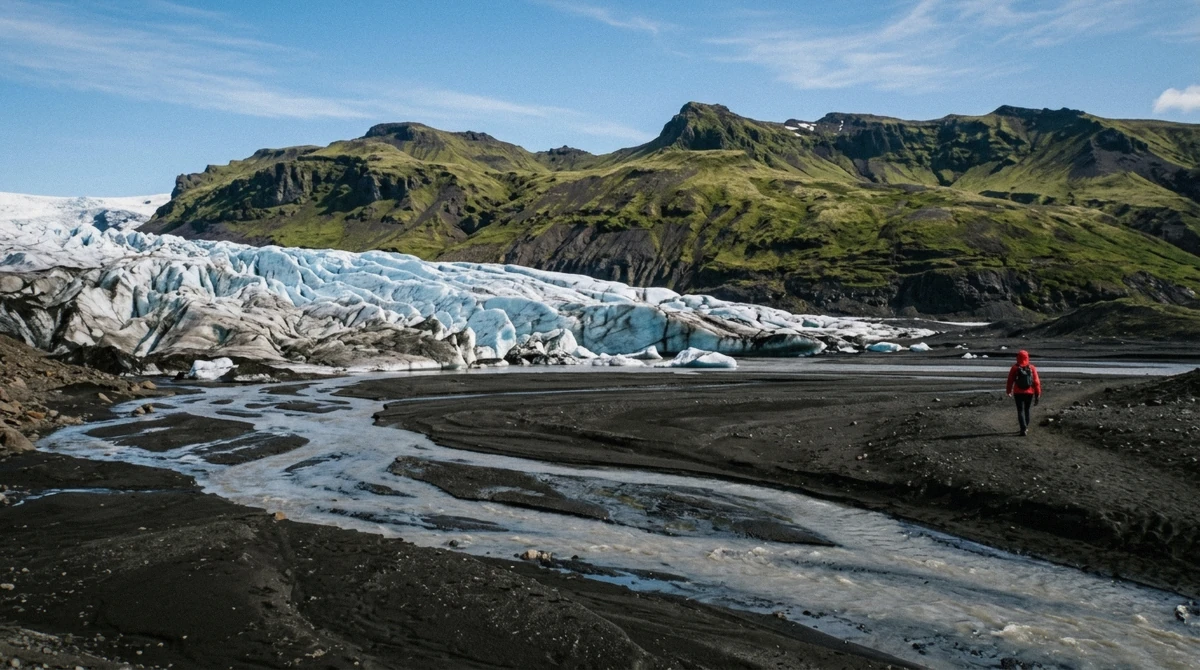
A Katla ice cave summer visit is the exception in a country where the famous crystal caves form in Vatnajökull each autumn and close by March, which is why so many summer visitors are told the ice cave season is over. Kötlujökull is the exception: a stable chamber survives the melt season here, and guides work it in every month of the year. So a Katla ice cave tour in July is a real tour into real glacier ice, not a consolation prize. What changes with the season is the light, the water underfoot and the depth of the blue, and this page goes through the year month by month so you know which version you are booking.
Quick answer
Yes, you can visit the Katla ice cave in summer. It is the only natural ice cave in Iceland open in July and August, because the ash layers in Kötlujökull insulate the ice and the glacier moves fast enough to keep a chamber standing through the melt. The trade is that a summer cave takes more daylight, runs wetter underfoot and reads a softer blue than the same cave in February. Tours run all year at the same price, from $182.55 for three hours out of Vík.
Key takeaways
- July and August: Katla is the only natural cave open, since the Vatnajökull caves run roughly November to March
- February gives the firmest ice and the deepest blue, at the cost of about seven hours of daylight
- Summer chambers are wetter, so waterproof trousers matter more than a thick coat
- December has the most weather cancellations of any month, which is worth knowing before you book a day tour
- Price does not move with the season: the same three-hour departure costs $182.55 in January and in July
- Inside the cave it is close to 0°C in every month, whatever the weather outside is doing
Seasons at a Glance
Daylight figures are for Vík at 63.4°N, where June barely gets dark and December gives you about five usable hours. The season changes the experience without changing the price or the itinerary.
| Season | Months | Daylight in Vík | What the cave is like | Best for |
|---|---|---|---|---|
| Winter | December to March | 5 to 11 hours | Firmest ice, deepest blue, driest floor | Photographers and anyone who wants the postcard version |
| Spring | April | 13 to 16 hours | Meltwater starts running, entrance moves more often | Quiet track and cheap rooms in Vík |
| Summer | May to September | 17 to 21 hours | Wetter, more daylight inside, softer blue | Anyone visiting when no other natural cave is open |
| Autumn | October and November | 8 to 13 hours | Ice firms up again, meltwater drains | Balance of light, colour and low crowds |
Which Season Fits You
If your trip is in June, July or August
Book Katla. It is the only natural ice cave in Iceland selling tickets, and the drive across the sand plain is at its best in long light.
If you want the bluest possible ice
Go in February. The chamber is at its firmest and the floor is dry, though you are working with about eight hours of daylight.
If you are chasing northern lights on the same trip
October to March, and take a day tour from Reykjavík so someone else drives home in the dark.
If you want the cave to yourself
April or October. The summer crowds have gone or not arrived, and the ice is in decent shape either way.
If your dates are fixed in December
Book the first days of your trip. December sees the most weather cancellations of any month on the south coast.
Summer, May to September: the Only Cave Still Open
From May the seasonal caves in Vatnajökull are shut and stay shut until roughly November. Kötlujökull keeps working, and in July and August a Katla tour is the only way to stand inside natural glacier ice in Iceland.
The chamber in summer is a different animal from the winter one. Meltwater runs through and under it, so the floor is wet and the walk in crosses more channels, which is why guides plank or ladder them. Daylight pours further into the cave, which makes photography easier and the blue paler. Outside it is around 12°C on the sand plain in August against near 0°C inside, and that swing catches people who left the fleece in the car.
Crowds are the other summer fact. Several operators run the same hours, and the entrance can hold more than one group. Take an early or late departure if you want a quiet minute in the chamber.
Autumn, October and November: the Balance Month
Flow drops, the meltwater drains out of the tunnels and the chamber tightens up again. October gives 8 to 11 hours of light, the sand plain turns gold in the low sun, and the roads to Vík are still easy.
November is when the calculus changes for everyone else: the Vatnajökull crystal caves reopen, so Katla stops being the only option in the country. Prices here do not react, but availability tightens as the winter cave season starts marketing in earnest.
Winter, December to March: the Postcard Version
This is the ice everyone has seen in photographs. Cold locks the chamber, the floor dries, and the blue goes deep because the only light reaching the back of the cave is what filters through several metres of ice.
The cost is daylight and weather. Vík gets about five usable hours in late December, so a twelve-hour day tour from Reykjavík runs both ends in the dark. Wind is the real enemy rather than snow: it cancels more departures than anything else, and December is the worst month for it. February is the sweet spot, with the ice at its best and the light back to about eight hours.
Spring, April: the Quiet Shoulder
April is underrated. The seasonal caves close during the month, the summer traffic has not arrived, and rooms in Vík are cheaper than they will be in July. Daylight climbs from 13 to 16 hours, so a three-hour tour from Vík leaves most of the day intact.
What you accept is instability. Meltwater starts running again and the entrance shifts more often than in winter, so the cave you visit in April may be a different chamber from the one photographed in February.
What Actually Changes Inside the Cave
Three things move with the season, and none of them is the temperature.
- Water: in summer meltwater runs through the tunnels and over the floor. Waterproof trousers earn their place from May to September.
- Light: long summer days push daylight deep into the chamber, which helps photographs of the entrance and washes out the blue at the back. Winter does the opposite.
- Shape: the ceiling and the entrance move as Kötlujökull flows. A chamber that works in December can be closed by spring, which is why the guide picks the cave that morning.
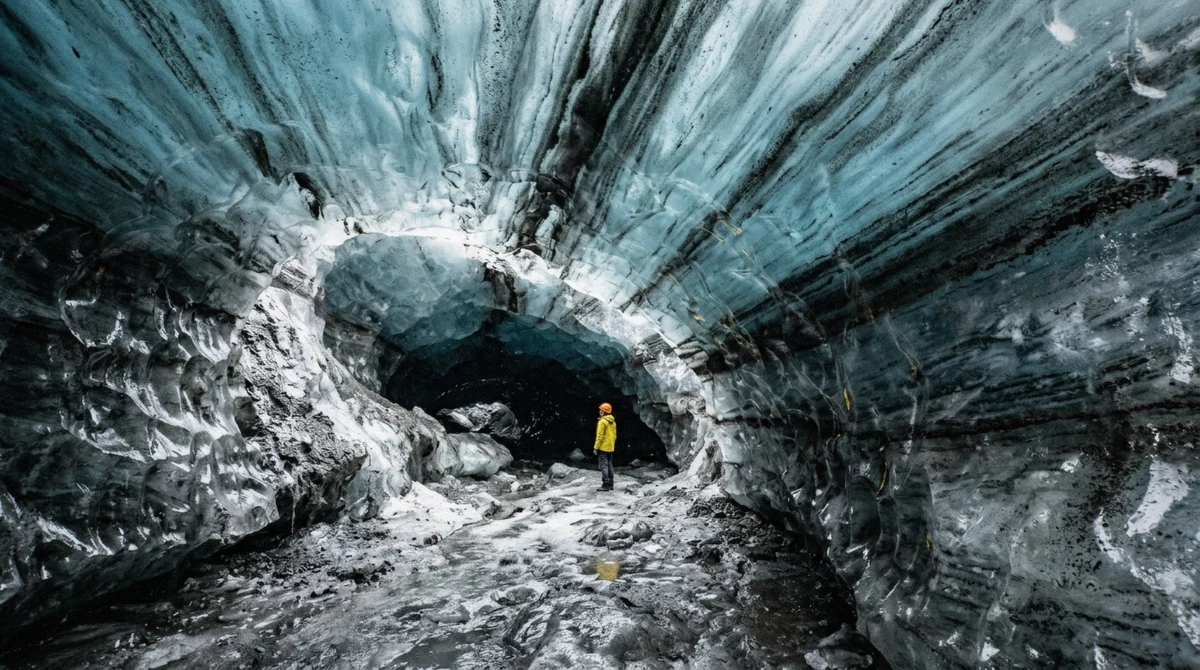
- Ash: the black bands stay put whatever the season, since they are pressed into ice several centuries old.
- Temperature: near 0°C all year. In a January gale the cave is warmer than the walk in.
What to Wear, by Season
Boots are the constant. Every month needs a stiff sole and ankle support, because crampons cannot grip a soft trainer, and no operator in Vík rents footwear for this trip. The five departures from Vík all fit crampons at the glacier edge.
| Season | Outer layer that matters most | Also bring |
|---|---|---|
| May to September | Waterproof trousers, because the floor and the walk in run wet | Light gloves, sunglasses for the sand plain glare |
| October and November | Windproof shell, since the sand plain is exposed | Warm hat, a head torch if you own one |
| December to March | Insulated jacket over a thermal base layer | Warm gloves, spare socks, sunglasses for low sun |
| April | Waterproof shell for the first meltwater | Layers you can shed in the jeep |
Best Time of Day, and What the Weather Does
Mid-morning to early afternoon carries the most light into the chamber, and in November and December that is the difference between seeing the back of the cave and not. In June it barely matters, so take the departure that suits your driving.
Weather cancels departures at short notice all year, most often in December. Wind at the glacier, a closed south coast road and a failed morning inspection of the chamber are the three causes, in that order. Every tour refunds in full when the operator cancels, and you can cancel yourself up to 24 hours out, so the practical defence is to book the cave for the first days of your trip rather than the last.
Crowds and Prices Through the Year
Prices do not follow the season here, which surprises people used to Icelandic summer surcharges. The three-hour departures from Vík run $182.55 to $276.13 in every month, and the day tours from Reykjavík $287.69 to $293.46.
What moves is availability. July and August fill because Katla is the only natural cave open; December to February fill because that is when people come for ice. April, October and early November are the genuinely quiet windows. In every month the Vík departures fill from the Reykjavík day groups first, since those travellers hold seats in the same jeeps.
So, When Should You Go
If your trip is already booked, go whenever you are here: the cave is open, the price is the same, and the ash bands are the point in any month. If the dates are yours to choose, February gives the best ice and October the best balance of light, colour and quiet.
Summer visitors should stop worrying about missing the season. You are not getting a lesser cave, you are getting a wetter one with better light, and it is the only one in the country still standing. Every departure, from either starting point, sits on our guide to ice caving under Katla.
Common Questions
Can I visit an ice cave in Iceland during the summer?
Only this one. The natural caves in Vatnajökull run roughly November to March, because summer meltwater floods them and softens the roof. Kötlujökull holds a walkable chamber through July and August, so a Katla tour is the only natural ice cave in Iceland selling tickets in high summer. The man-made Langjökull tunnel in the west is the other year-round option, though it is dug rather than formed.
Is the Katla ice cave worth it in summer?
Yes, with adjusted expectations. You get more daylight inside and a wetter floor, and the blue is softer than the February photographs that sold you the idea. The ash bands, the jeep crossing of the sand plain and the scale of the chamber are unchanged. Our full verdict, including the price question, is in is the Katla cave worth it.
What is the best month to visit the Katla ice cave?
February for the ice itself: the chamber is firmest, the floor is dry and the blue is deepest, with about eight hours of daylight. October for the balance: decent light, thin crowds and a glacier that has drained its summer meltwater. Avoid December if your dates are flexible, since it carries the most weather cancellations.
Is the ice still blue in July?
Yes, though paler than in winter. The blue comes from compression rather than cold: ice several centuries old has had the air squeezed out of it, so it absorbs the red end of daylight and returns the blue. What summer changes is how much white daylight floods in through the entrance, which lifts the whole chamber and softens the colour at the back.
How many hours of daylight are there in December?
About five usable hours in Vík at the winter solstice, with the sun low the whole time. That is enough for a three-hour tour from the village but it means a twelve-hour day tour from Reykjavík starts and ends in the dark. June is the opposite, with light through the night and no practical constraint on departure times.
Do tours run in every month of the year?
Yes. Departures run all year from Vík, with more slots per day in winter and summer than in the shoulder months. Individual departures cancel for wind, road closures or a failed morning inspection, and you are refunded in full when that happens.